
Forehead Fat Grafting in Seomyeon, Busan
Forehead fat grafting (이마 지방이식) uses a small amount of your own fat, harvested by gentle liposuction, purified and injected to give a flat or sloping forehead a smoother, rounder contour. In Seomyeon, Busan, it typically takes about 1–2 hours under sedation and local anesthesia. Swelling settles over 1–2 weeks, and part of the grafted fat is naturally reabsorbed.
Independent patient guide · Medically informative, not a substitute for a doctor's advice · Last reviewed:
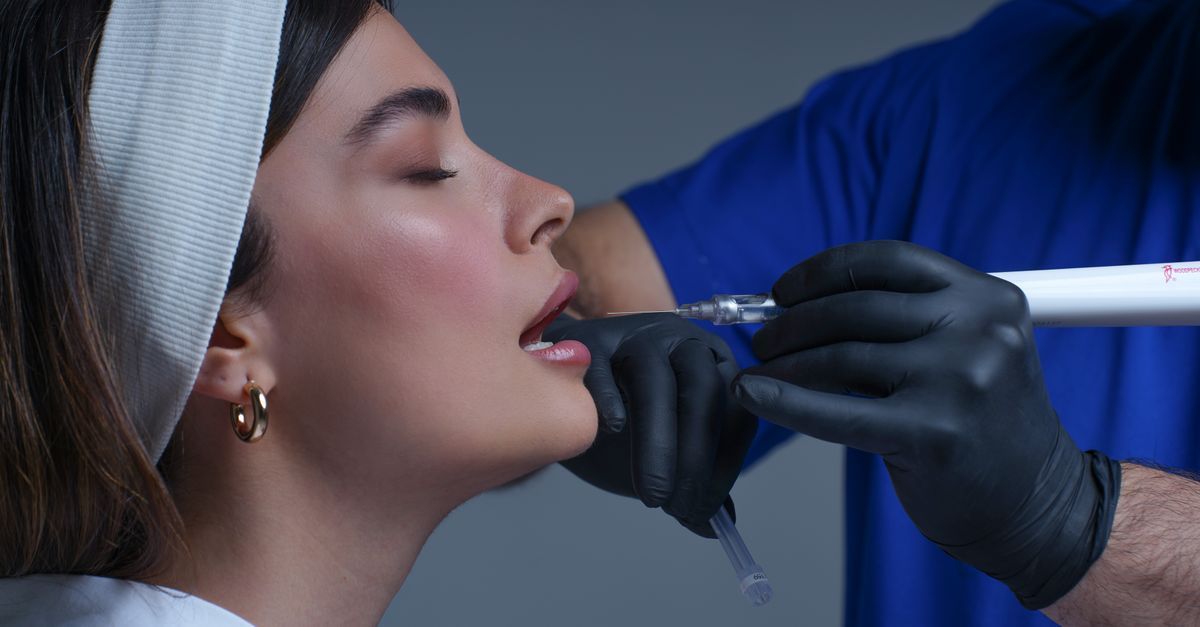
What is forehead fat grafting?
Forehead fat grafting is a form of autologous fat transfer. Fat is taken from an area with spare fat, processed to separate healthy fat cells from fluid and oil, then injected in tiny amounts across the forehead with a blunt cannula. Grafted fat that establishes a blood supply survives permanently; the rest is reabsorbed over the first few months. Because volume loss is expected, surgeons often slightly overfill or plan a second session.
Who is it for?
- People with a flat or backward-sloping forehead who want a softer, rounded profile
- Those with indentations or uneven areas in the forehead or temples
- Patients who prefer their own tissue to fillers or implants
Very thin people may not have enough donor fat. Smokers have poorer fat survival and are usually asked to stop beforehand.
What happens at the clinic
- Consultation: the surgeon assesses forehead shape in profile and front view, skin thickness and suitable donor areas.
- Harvest: under sedation, small incisions allow gentle liposuction from the donor area.
- Processing: the fat is cleaned, often by centrifuge or filtration.
- Injection: fat is placed in multiple fine layers through tiny entry points near the hairline or eyebrows.
- Dressing: light taping or a band; donor sites are covered and a compression garment may be used.
Recovery and aftercare
The forehead looks swollen and may bruise for 1–2 weeks; swelling can track down to the eyelids. Avoid pressing, massaging or wearing tight hats on the area unless told otherwise, and sleep with your head raised. Avoid saunas, alcohol and intense exercise for about two weeks. The final volume is generally judged at 3–6 months once reabsorption has settled.
Risks and side effects
- Uneven reabsorption, lumps or an irregular surface
- Under- or over-correction needing touch-ups or dissolving procedures
- Infection or cysts from fat necrosis
- Donor-site bruising or irregularity
- Very rare but serious: fat entering a blood vessel (fat embolism), which can affect vision. Experienced surgeons use blunt cannulas and slow, low-pressure injection to reduce this risk.
Choosing a clinic for forehead fat grafting in Seomyeon
- Choose a board-certified plastic surgeon experienced in facial fat transfer.
- Ask about blunt-cannula technique and how they minimise vascular risk.
- Ask how much volume they plan and whether a second session is likely.
- Ask how they would treat lumps or asymmetry later.
- Confirm who to contact for urgent symptoms such as sudden vision change or severe pain.
Visiting Seomyeon
A stay of about a week allows for the first check. Seomyeon is the meeting point of Metro Lines 1 and 2, so it is easy to reach from most parts of Busan.
Key facts
- Treats: flat, sloping or uneven forehead, temple hollows
- Donor sites: usually abdomen or thighs
- Procedure time: about 1–2 hours
- Anesthesia: local with IV sedation
- Downtime: about 1–2 weeks of swelling
- Touch-ups: a second session is sometimes needed after about 3–6 months
- Typical NHI coverage: not covered (cosmetic)
Frequently asked questions
How much grafted fat survives in the forehead?
Survival varies between people and techniques, and a portion of the fat is always reabsorbed during the first few months. Whatever remains after about six months is generally considered permanent. Surgeons often plan a touch-up for this reason.
Fat grafting or filler for the forehead: which is better?
Filler gives immediate, adjustable results without surgery but is temporary and needs repeat treatments. Fat grafting uses your own tissue and can last long-term, but involves harvest, more swelling and less predictable retention.
How long does swelling last after forehead fat grafting?
Most swelling and bruising settle within 1–2 weeks, and many people return to work then. Swelling may move down to the eyelids for a few days. Final contour takes around three to six months.
Is forehead fat grafting safe?
It is a common procedure, but any injection into the face carries a small risk of entering a blood vessel. Choosing an experienced surgeon who uses blunt cannulas and careful technique is the main way to reduce serious risk.
Will I need more than one session?
Some people are satisfied with one session, while others need a second after 3–6 months to refine shape or replace reabsorbed volume. Ask the surgeon how likely this is in your case.
Medical disclaimer: Seomyeon.Clinic is an independent information directory. Content is for general education and does not replace a consultation with a licensed physician. Suitability, risks, results and costs vary by person and clinic. In an emergency in Korea, call 119.