
Hair Transplant Revision in Seomyeon, Busan
Hair transplant revision (모발이식 재수술) corrects an unsatisfactory previous transplant, such as an unnatural or pluggy hairline, poor density, wrong hair angles, or a depleted or scarred donor area. In Seomyeon, Busan, it typically involves a detailed assessment of remaining donor supply, then targeted FUE grafting, graft removal or scar camouflage under local anesthesia. Most surgeons wait at least 12 months after the previous surgery.
Independent patient guide · Medically informative, not a substitute for a doctor's advice · Last reviewed:
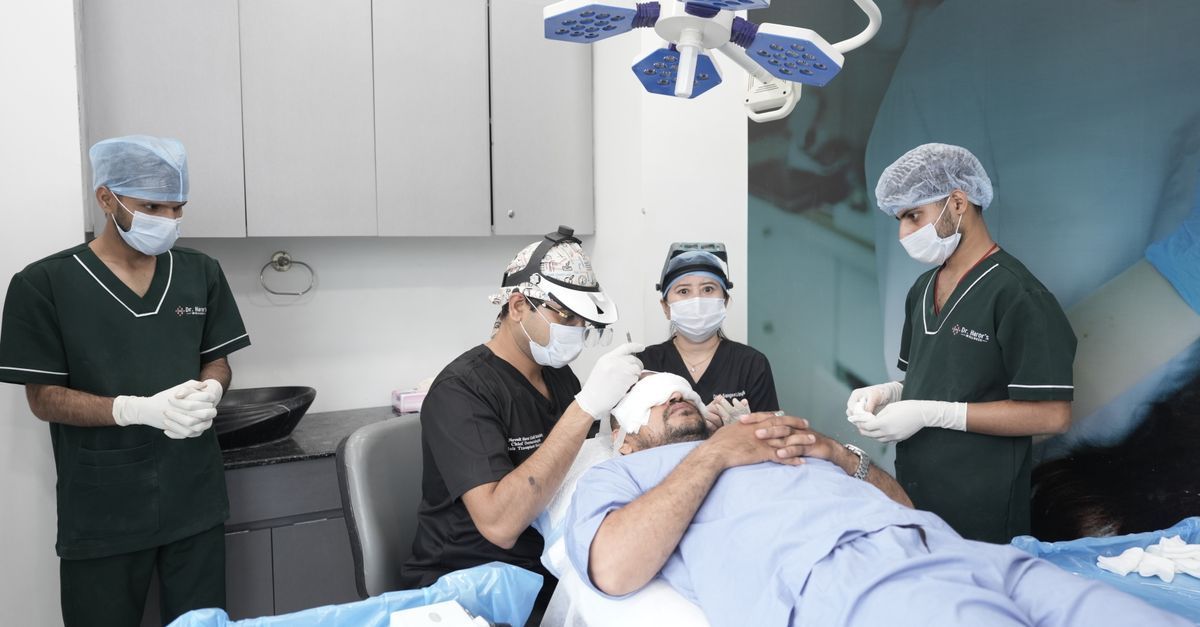
What is hair transplant revision?
Revision surgery repairs outcomes that look unnatural or inadequate after a previous hair transplant. Problems range from mild (density lower than hoped) to complex (large "plug" grafts from older techniques, hairs growing in the wrong direction, a straight hairline that looks artificial, or a moth-eaten donor area after overharvesting). Revision is more challenging than a first transplant because donor hair is limited and scar tissue may be present in both donor and recipient areas.
Who is it for?
- People unhappy with hairline design, density or naturalness
- Those with visible donor scarring or patchy donor areas
- Patients whose hair loss progressed behind a previous transplant, leaving an "island" of hair
Wait at least 12 months after the previous procedure so final growth can be judged. If ongoing hair loss is the main issue, stabilising it with medication comes first.
What happens at the clinic
- Detailed history: bring records of previous surgery, graft numbers and technique if possible.
- Donor assessment: density and remaining capacity, including beard or body hair as alternative donors.
- Plan: prioritising the most visible problems, often the front hairline.
- Correction: removing and re-implanting badly placed grafts, adding fine single-hair grafts to soften the hairline, or filling gaps.
- Donor repair: FUE into scars, or SMP to camouflage.
Recovery and aftercare
Recovery is similar to a standard FUE: scabs clear within 1–2 weeks and transplanted hair regrows from around 3–4 months, with results at 9–12 months or later. Because scarred areas heal more slowly, final assessment may take longer. Continuing medical treatment protects native hair and the investment in surgery.
Risks and side effects
- Lower graft survival in scarred recipient areas
- Further depletion of a limited donor area
- Incomplete correction requiring additional sessions
- Shock loss, swelling and folliculitis
- Not every problem can be fully corrected; improvement rather than perfection is the goal
Choosing a clinic for hair transplant revision in Seomyeon
- Choose a surgeon who regularly performs revision cases and shows examples.
- Ask how they will conserve your remaining donor hair for the future.
- Ask whether removal of poorly placed grafts is needed.
- Ask about combining SMP or laser hair removal to refine results.
- Get a clear, prioritised plan with realistic expectations.
Planning a revision visit
Revision often benefits from a consultation visit first, then surgery later. Seomyeon is a short trip from Busan Station on Line 1 or from the airport via the light rail and Line 2.
Key facts
- Treats: pluggy or harsh hairlines, low density, misdirected hairs, visible donor scars, overharvested donor areas
- Methods: additional FUE grafts, removal and re-implantation of poorly placed grafts, laser hair removal for misplaced hairs, SMP
- Timing: usually 12 months or more after the last transplant
- Procedure time: about 2–6 hours
- Anesthesia: local
- Key limitation: finite donor supply
- Typical NHI coverage: not covered (cosmetic)
Frequently asked questions
How soon can I have a hair transplant revision?
Most surgeons recommend waiting at least 12 months after the previous transplant so final growth can be assessed and tissues have healed. Earlier intervention is rarely advisable unless there is an urgent problem.
Can a pluggy hairline be fixed?
Often, yes. Surgeons may remove or split large old grafts, re-implant them as smaller units and add fine single-hair grafts at the front to create a softer, more natural hairline.
What if my donor area is overharvested?
Options include careful FUE from remaining safe zones, using beard or body hair as donors, and scalp micropigmentation to camouflage thinning. A conservative approach protects what remains.
Is revision surgery more difficult than a first transplant?
Yes, generally. Scar tissue, limited donor supply and existing grafts make planning more complex, and graft survival may be lower. Choosing a surgeon experienced in revisions is important.
Will a revision give me the density I originally wanted?
Not always. Revision aims for meaningful improvement within the limits of your donor supply and scalp condition. A good surgeon will set realistic goals and prioritise the most visible areas.
Medical disclaimer: Seomyeon.Clinic is an independent information directory. Content is for general education and does not replace a consultation with a licensed physician. Suitability, risks, results and costs vary by person and clinic. In an emergency in Korea, call 119.