
Lung Function Test in Seomyeon, Busan
A lung function test, most commonly spirometry (폐기능 검사), measures how much air you can breathe out and how quickly, to detect and monitor conditions such as asthma and COPD. In Seomyeon, internal medicine clinics and screening centres perform it in about 15–30 minutes: you blow forcefully into a mouthpiece several times, sometimes before and after an inhaled bronchodilator, and the doctor explains results the same day.
Independent patient guide · Medically informative, not a substitute for a doctor's advice · Last reviewed:
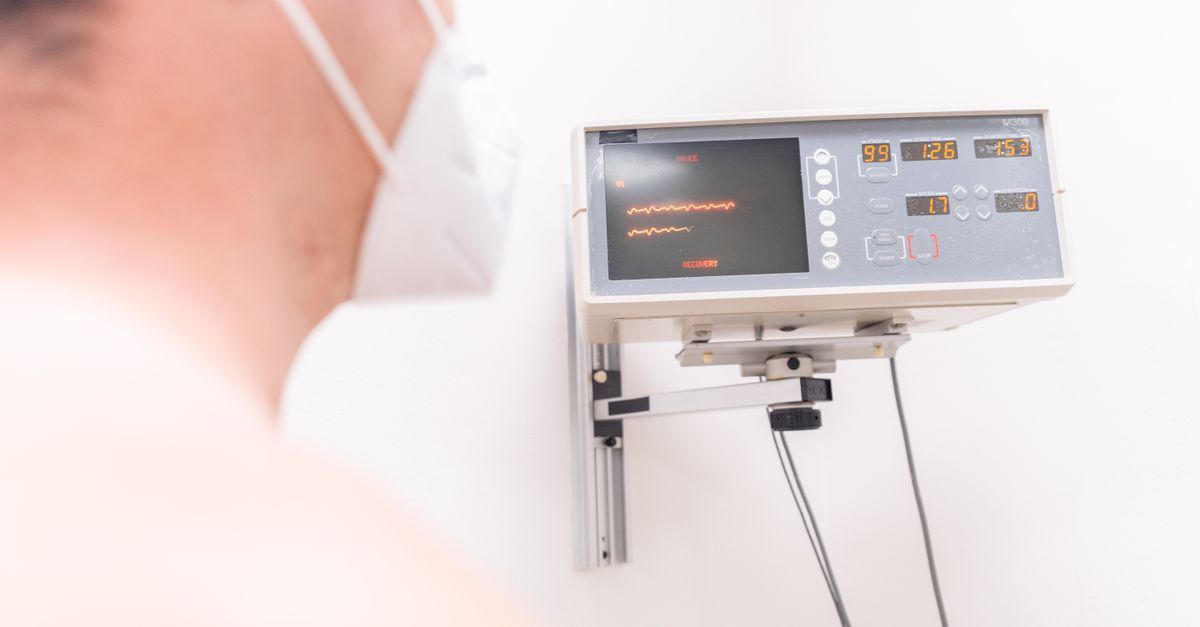
What is a lung function test?
Spirometry measures the volume of air you can forcefully exhale after a deep breath (FVC) and how much of it comes out in the first second (FEV1). The ratio between them shows whether airways are narrowed, as in asthma and COPD, while reduced volumes may suggest restriction from conditions affecting lung tissue or the chest wall. Results are compared with predicted values for your age, sex, height and ethnicity.
Who is it for?
- People with chronic cough, wheeze or breathlessness
- Current or former smokers over about 40, particularly with symptoms
- Patients with asthma or COPD, to confirm diagnosis and monitor treatment
- Workers exposed to dust or chemicals, and some pre-employment or pre-surgery assessments
- Health check-ups that include respiratory assessment
Severe breathlessness at rest, blue lips or chest pain are emergencies: call 119 instead of booking a test.
What happens at the clinic
- Preparation: avoid smoking for at least an hour, heavy meals and vigorous exercise beforehand; wear loose clothing. You may be asked to withhold certain inhalers.
- Measurements: height and weight are recorded to calculate predicted values.
- Technique: with a nose clip on, you breathe in fully, seal your lips around the mouthpiece and blow out as hard and long as possible; staff coach you.
- Repeats: several attempts ensure consistent results.
- Bronchodilator testing: if indicated, you inhale a reliever and repeat the test after 10–15 minutes.
After the test
You may feel briefly light-headed or tired; this passes quickly. The doctor explains whether the pattern is normal, obstructive or restrictive, and whether reversibility suggests asthma. Results guide treatment and serve as a baseline for future comparison. Smokers with early abnormalities have a strong reason to quit, as stopping slows lung function decline.
Risks and limitations
Spirometry is very safe, but forceful breathing is avoided shortly after certain surgeries, heart attacks or with some eye or chest conditions. Results depend on effort and technique, so poor effort can underestimate function. Normal spirometry does not rule out all lung diseases; imaging or advanced tests may be needed.
Choosing a clinic for lung function testing in Seomyeon
- Ask whether bronchodilator testing is available if asthma is suspected.
- Check that trained staff coach technique and repeat attempts.
- Ask for a printed report with predicted values and the flow-volume curve.
- Ask where advanced tests are arranged if needed.
- Bring your inhalers and a list of medicines.
Air quality note
Busan's fine-dust days can worsen respiratory symptoms. Testing during a stable period gives the most reliable baseline; clinics near Seomyeon Station on both metro lines make repeat tests simple.
Key facts
- Main test: spirometry
- Key values: FEV1, FVC and the FEV1/FVC ratio
- Bronchodilator test: repeat after an inhaler to check reversibility
- Test time: about 15–30 minutes
- Preparation: avoid smoking, heavy meals and some inhalers beforehand as instructed
- Detects: obstructive (asthma, COPD) and restrictive patterns
- Advanced tests: lung volumes and diffusion capacity, usually at hospitals
Frequently asked questions
What does a lung function test measure?
Spirometry measures how much air you can exhale (FVC) and how fast (FEV1). The ratio helps identify narrowed airways, as in asthma or COPD, or reduced lung volume.
How should I prepare for spirometry?
Avoid smoking for at least an hour, heavy meals and vigorous exercise beforehand, wear loose clothing, and follow instructions about pausing inhalers.
Is spirometry painful?
No. It requires strong effort and may make you briefly light-headed or cough, but it is safe and quick.
What is a bronchodilator test?
After initial spirometry, you inhale a reliever medicine and repeat the test. A significant improvement suggests reversible airway narrowing, which supports an asthma diagnosis.
Can spirometry detect COPD early?
Yes. It can show airflow limitation before symptoms become severe, especially in smokers. Early diagnosis encourages quitting smoking and appropriate treatment.
Medical disclaimer: Seomyeon.Clinic is an independent information directory. Content is for general education and does not replace a consultation with a licensed physician. Suitability, risks, results and costs vary by person and clinic. In an emergency in Korea, call 119.