
Myopia Control for Children in Seomyeon, Busan
Myopia control for children uses treatments that slow the progression of nearsightedness during growth, rather than only correcting blur. Options include low-dose atropine eye drops, orthokeratology (Dream Lens), specially designed spectacle lenses and soft contact lenses, plus more outdoor time. At Seomyeon eye clinics, progress is usually tracked every 6 months with refraction and axial length measurements.
Independent patient guide · Medically informative, not a substitute for a doctor's advice · Last reviewed:
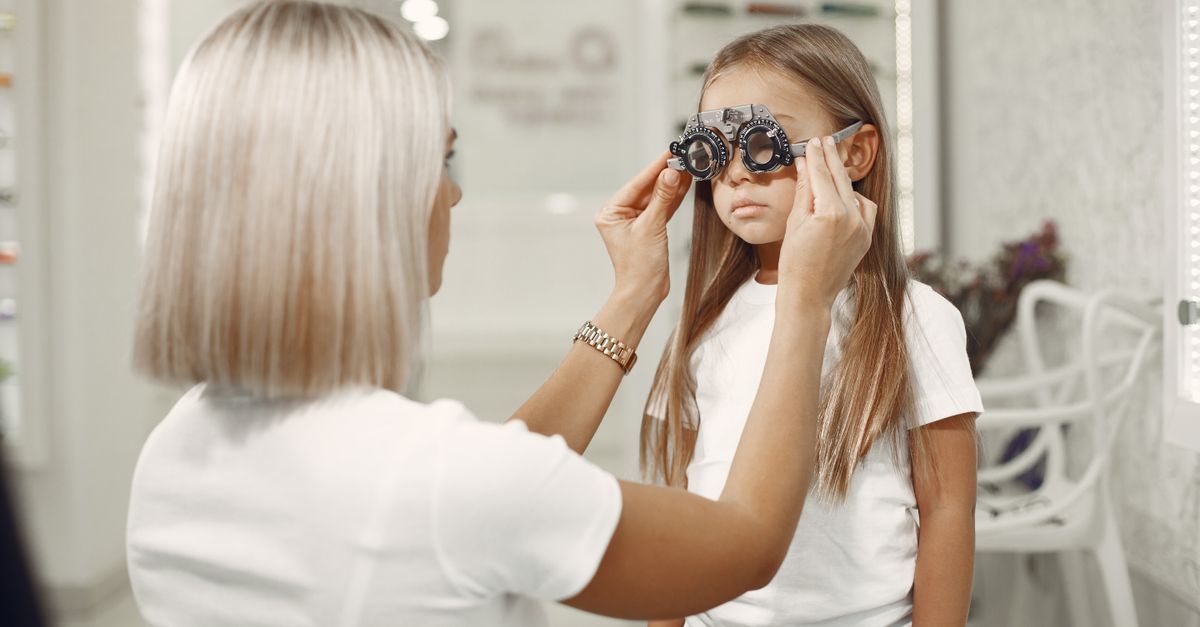
What is myopia control?
Myopia (근시) develops when the eye grows too long, so distant objects look blurry. In children, it often worsens year by year until the late teens. Standard glasses correct the blur but do not slow this growth. Myopia control treatments aim to reduce the rate of progression, lowering the chance of reaching high myopia, which is linked to sight-threatening conditions later in life.
Who is it for?
- Children whose myopia started young or is progressing quickly
- Children with one or both parents who are highly nearsighted
- Pre-myopic children at higher risk, after discussion with an eye doctor
Treatment options
- Low-dose atropine drops: used nightly; appear to slow progression with few side effects at low concentrations.
- Orthokeratology (ortho-k, Dream Lens): rigid lenses worn overnight to reshape the cornea, giving clear daytime vision and slowing elongation.
- Myopia-control spectacle lenses: special designs that correct central vision while altering peripheral focus.
- Myopia-control soft contact lenses: daily lenses with dual-focus or multifocal designs.
- Outdoor time and habits: time outside in daylight and regular breaks from near work are encouraged.
What happens at the clinic
- Baseline exam: cycloplegic refraction, axial length and corneal measurements.
- Option discussion: based on age, prescription, lifestyle and the child's ability to handle lenses.
- Starting treatment: drops, lens fitting or glasses prescription.
- Monitoring: checks around every six months to assess progression.
- Adjustment: treatments may be combined or changed if progression continues.
Treatment outlook
No method stops myopia completely, and response varies between children. Treatment is typically continued through the main growth years. Consistent use and follow-up are key.
Risks and side effects
Atropine can cause light sensitivity or near blur, more so at higher doses. Ortho-k and contact lenses carry a small risk of corneal infection, especially with poor hygiene. Special spectacles may need a brief adaptation period.
Choosing a clinic for myopia control in Seomyeon
- Ask whether axial length is measured, not just the glasses prescription.
- Ask which options are available and how the doctor chooses between them.
- For ortho-k, ask about lens hygiene training and follow-up frequency.
- Ask how success will be judged and when treatment might be changed.
- Confirm instructions for drops or lenses are clear for both parent and child.
For families in Busan
Myopia control is a multi-year commitment, so a clinic convenient to home or school helps. Seomyeon's two-line metro hub is reachable from much of the city.
Key facts
- Goal: slow myopia progression and eye elongation during childhood
- Options: low-dose atropine, ortho-k, myopia-control spectacles, multifocal soft contacts
- Lifestyle: daily outdoor time, breaks from near work
- Monitoring: refraction and axial length about every 6 months
- Typical duration: often several years, through the main growth period
- Why it matters: high myopia raises lifelong risk of retinal detachment, glaucoma and myopic maculopathy
Frequently asked questions
Can myopia in children be stopped?
Current treatments slow progression but do not stop it completely. Results vary, and treatment usually continues through the main growth years.
Is low-dose atropine safe for children?
Low-dose atropine is widely used and generally well tolerated. Some children notice mild light sensitivity or near blur. Your eye doctor will monitor for side effects.
What is the best myopia control method?
There is no single best option. Atropine, ortho-k, special spectacles and contact lenses each have evidence. Choice depends on the child's age, prescription and lifestyle.
Does spending time outdoors help prevent myopia?
Studies suggest more time outdoors is associated with a lower risk of developing myopia. It is a simple, low-risk habit to encourage.
When should myopia control start?
Ideally as soon as myopia is diagnosed or progression is noticed, as younger children tend to progress faster.
Medical disclaimer: Seomyeon.Clinic is an independent information directory. Content is for general education and does not replace a consultation with a licensed physician. Suitability, risks, results and costs vary by person and clinic. In an emergency in Korea, call 119.