
Non-Shaven Hair Transplant in Seomyeon, Busan
A non-shaven hair transplant (무삭발 모발이식) is a hair transplant performed without shaving the whole head, so existing hair hides the donor and recipient areas and the surgery is less noticeable. In Seomyeon, Busan, it is done using strip (FUT) harvesting, or FUE through small hidden shaved windows, with grafts implanted between existing hairs. It usually takes longer than standard FUE and suits moderate graft numbers.
Independent patient guide · Medically informative, not a substitute for a doctor's advice · Last reviewed:
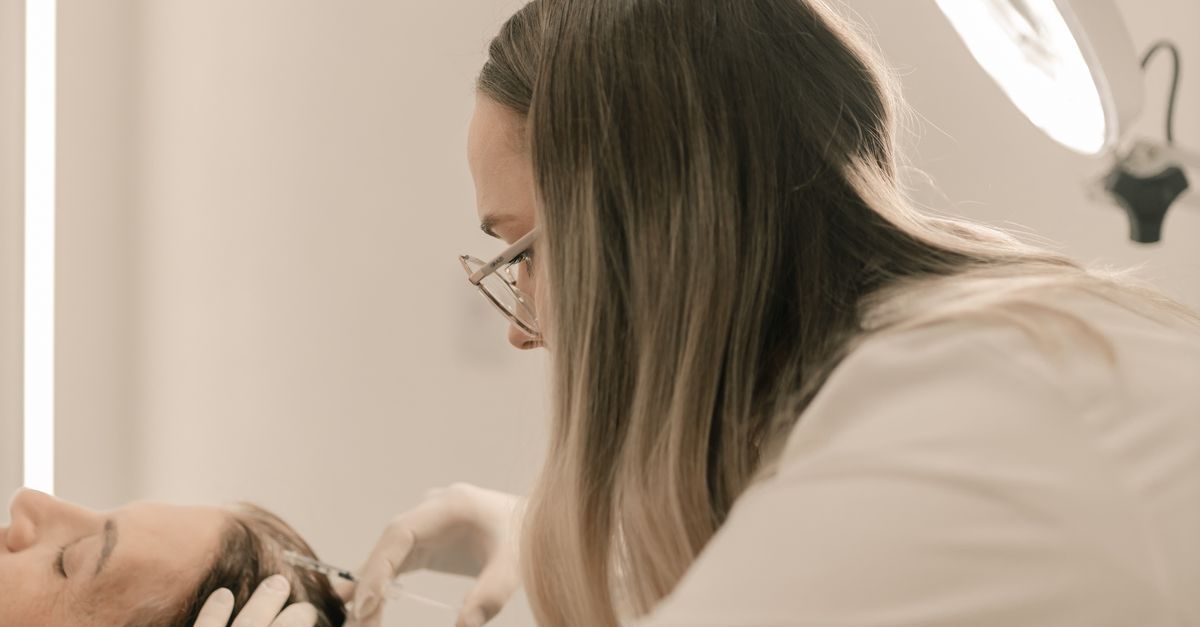
What is a non-shaven hair transplant?
Non-shaven transplant is popular in Korea among office workers who cannot take visible time off. The key differences from standard FUE are in how grafts are taken and placed:
- Donor harvest: either a thin strip is taken (FUT) and the closed wound is hidden by hair above it, or FUE is done through small shaved windows covered by surrounding longer hair.
- Recipient area: instead of shaving, the surgeon implants grafts between existing hairs, usually with implanter pens that let them place grafts precisely without cutting surrounding hair shafts.
Because working around existing hair is slower and more technically demanding, the number of grafts per session may be lower than with fully shaved FUE.
Who is it for?
- People who need to return to work or social life quickly without visible signs
- Those with mild to moderate thinning or hairline recession
- Women, who often prefer not to shave
- People with enough existing hair length to cover the area
Very large areas of baldness are usually better treated with shaved FUE or FUT, possibly over multiple sessions.
What happens at the clinic
- Consultation: diagnosis, donor assessment and discussion of graft limits for the non-shaven approach.
- Design: hairline or density zones are marked; hair may be clipped back.
- Local anesthesia: donor and recipient areas are numbed.
- Harvest: strip or hidden FUE windows.
- Implantation: careful placement between existing hairs, matching angle and direction.
- Check: the area is cleaned and styled to cover where possible.
Recovery and aftercare
Existing hair hides small scabs, which shed in about 1–2 weeks. Follow washing instructions carefully, avoid scratching and heavy sweating, and sleep with the head raised for a few nights. Transplanted hairs typically shed and then regrow from around 3–4 months, with fuller results at 9–12 months.
Risks and side effects
- Shock loss of surrounding native hair, usually temporary
- Damage to existing hairs during implantation if technique is rushed
- FUT linear scar in the donor area if a strip is used
- Lower graft numbers per session than shaved methods
- Swelling, folliculitis and numbness
Choosing a clinic for non-shaven transplant in Seomyeon
- Ask which donor method they use for non-shaven cases, and where any scar will be.
- Ask the realistic maximum graft number for your case without shaving.
- Ask how they avoid cutting or damaging existing hair during implantation.
- Ask about medication to reduce shock loss and ongoing thinning.
- Request before-and-after photos of non-shaven patients specifically.
Discreet recovery in Busan
Because signs are less visible, many people schedule surgery before a weekend. Seomyeon's location at the Line 1 and Line 2 interchange keeps the next-day check simple.
Key facts
- Treats: hairline recession, mild to moderate thinning, density boosting
- Donor methods: FUT strip or small concealed FUE patches; long-hair FUE in some clinics
- Implantation: implanter pens placed between existing hairs
- Procedure time: often longer than shaved FUE, up to a full day
- Anesthesia: local, sometimes with sedation
- Downtime: scabs hidden by existing hair; many return to work within days
- Typical NHI coverage: not covered (cosmetic)
Frequently asked questions
Is a non-shaven hair transplant as effective as standard FUE?
Graft survival can be similar when done well. The main trade-off is that fewer grafts may be placed per session, and the procedure takes longer. It suits moderate needs rather than very large bald areas.
Can people tell I had a non-shaven transplant?
Usually much less than with shaved methods. Existing hair hides small scabs and redness, and many people return to work within a few days. Very close inspection may still show some redness in the first week.
Does a non-shaven transplant use FUE or FUT?
It can use either. Some clinics take a donor strip (FUT), which needs no shaving but leaves a linear scar. Others use FUE through small hidden shaved areas or long-hair FUE.
How many grafts can be done without shaving?
It varies by clinic, technique and hair type. Non-shaven sessions are commonly smaller than shaved sessions. Your surgeon should give a realistic range for your case during consultation.
Is non-shaven hair transplant good for women?
Often yes. Women frequently have thinning at the part or hairline and prefer not to shave. A proper diagnosis is important first, since some female hair loss patterns are not suitable for transplant.
Medical disclaimer: Seomyeon.Clinic is an independent information directory. Content is for general education and does not replace a consultation with a licensed physician. Suitability, risks, results and costs vary by person and clinic. In an emergency in Korea, call 119.