
Tattoo Removal in Seomyeon, Busan
Tattoo removal (문신 제거) usually uses picosecond or Q-switched lasers to shatter tattoo ink into tiny particles that the immune system gradually clears. In Seomyeon, Busan, each session takes minutes to about half an hour with numbing. Most tattoos need multiple sessions spaced 6–8 weeks or more apart; black ink fades most readily, while some colours are harder to remove.
Independent patient guide · Medically informative, not a substitute for a doctor's advice · Last reviewed:
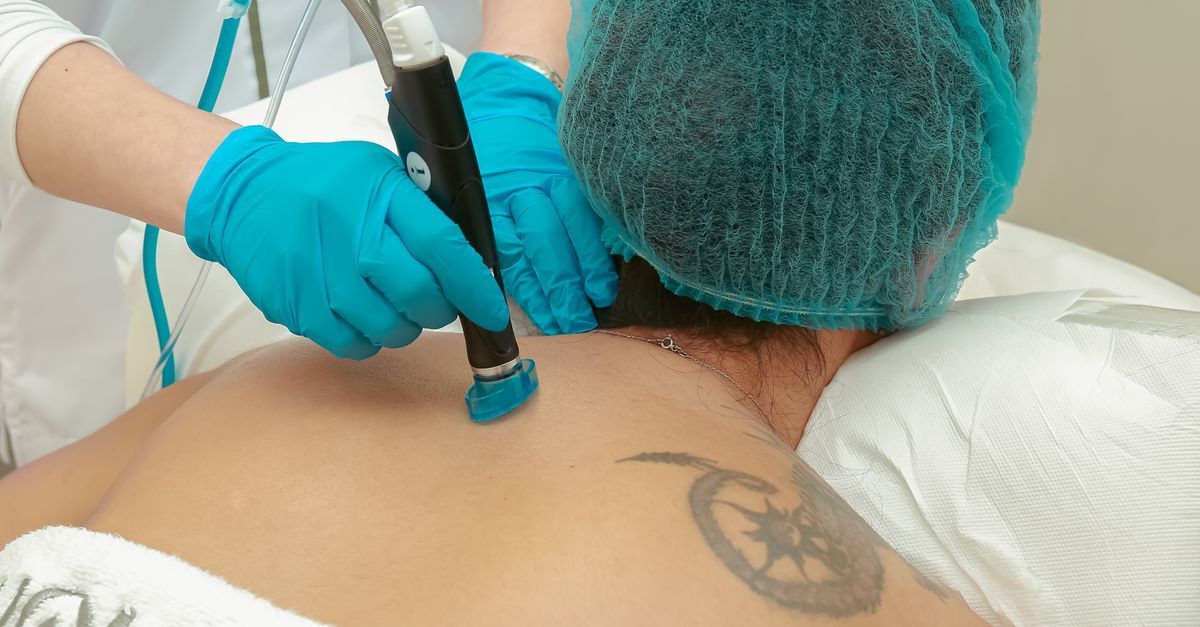
What is tattoo removal?
Tattoo ink particles are too large for the body to remove on its own. Lasers deliver ultra-short pulses that break ink into smaller fragments, which immune cells carry away over the following weeks. Picosecond lasers produce shorter pulses than older Q-switched nanosecond lasers and can be more effective for some inks. Different wavelengths target different colours: black and dark blue absorb well, while green, light blue, yellow and some reds can be stubborn.
Who is it for?
- People wanting to remove or lighten a tattoo completely
- Those fading a tattoo before a cover-up design
- People with semi-permanent makeup (eyebrows, eyeliner) they want to correct
Some cosmetic tattoo inks containing white or flesh tones can darken when lasered, so a test spot is often done. Pregnancy, active skin infection and recent tanning are reasons to postpone.
What happens at the clinic
- Assessment: size, colours, ink depth, age and location are reviewed; photos are taken.
- Numbing: topical cream, sometimes local injection for larger areas.
- Laser treatment: with eye protection, pulses are delivered over the tattoo; skin may turn white briefly (frosting).
- Cooling and dressing: cold packs and an ointment dressing are applied.
- Next session: booked after the skin heals fully, usually at least 6–8 weeks.
Recovery and aftercare
Expect redness, swelling and tenderness; blisters and pinpoint bleeding can occur. Keep the area clean, apply ointment and a dressing as instructed, and do not pop blisters or pick scabs. Avoid sun, swimming and saunas until healed. Fading continues for weeks after each session as ink is cleared.
Risks and side effects
- Blistering, scabbing and temporary pigment changes (lighter or darker skin)
- Incomplete removal or ghost image
- Scarring or texture change, especially with aggressive treatment or picking
- Ink darkening with certain cosmetic or white inks
- Allergic reactions, rarely, to released ink particles
Choosing a clinic for tattoo removal in Seomyeon
- Choose a dermatologist-supervised clinic that explains how your ink colours will respond.
- Ask which laser and wavelengths they have available for multicoloured tattoos.
- Ask how they space sessions to protect your skin.
- Ask whether a test spot is advisable, especially for cosmetic tattoos.
- Be realistic: ask for an estimate of sessions as a range, not a guarantee.
Long-term planning
Because sessions are spread over months, residents of Busan are best placed to complete a full course. Seomyeon's clinics are a short ride from most neighbourhoods on Line 1 or Line 2.
Key facts
- Treats: professional, amateur and cosmetic tattoos (e.g., eyebrow), partial fading for cover-ups
- Lasers: picosecond and Q-switched Nd:YAG and other wavelengths matched to ink colours
- Session time: a few minutes to about 30 minutes
- Sessions: often many; amateur tattoos may need fewer
- Interval: typically 6–8 weeks or longer
- Healing: redness, swelling, possible blisters and scabs for 1–2 weeks
- Alternative: surgical excision for small tattoos
Frequently asked questions
How many sessions does tattoo removal take?
It varies widely. Small amateur tattoos may fade in fewer sessions, while large, dense or multicoloured professional tattoos often need many. Ink type, depth, location and your immune response all affect the number.
Does tattoo removal hurt?
It is often described as hot fat splattering or a strong rubber band snap. Numbing cream, cooling and sometimes local anesthetic injections make it manageable. Sessions are usually short.
Why are some tattoo colours harder to remove?
Each laser wavelength is absorbed best by certain colours. Black absorbs most wavelengths well, while green, light blue, yellow and some pastel inks absorb poorly and may need special wavelengths or more sessions.
Will tattoo removal leave a scar?
With proper settings and aftercare, scarring is uncommon, but temporary lightening or darkening of the skin is common. Picking scabs, infection or overly aggressive treatment increase scar risk.
Can I remove a tattoo during a short visit to Busan?
You can start with one session, but complete removal requires many sessions over months. Visitors usually continue treatment at home. Keep the area out of the sun and protected while healing during travel.
Medical disclaimer: Seomyeon.Clinic is an independent information directory. Content is for general education and does not replace a consultation with a licensed physician. Suitability, risks, results and costs vary by person and clinic. In an emergency in Korea, call 119.