
Alopecia Areata Treatment in Seomyeon, Busan
Alopecia areata treatment (원형탈모 치료) manages an autoimmune condition in which the immune system attacks hair follicles, causing round or oval bald patches on the scalp, beard or eyebrows. In Seomyeon, Busan, a dermatologist usually confirms the diagnosis by examination and trichoscopy, then treats small patches with steroid injections every 4–6 weeks. Regrowth often starts within 1–3 months, though relapses are common.
Independent patient guide · Medically informative, not a substitute for a doctor's advice · Last reviewed:
What is alopecia areata?
Alopecia areata (원형탈모) occurs when immune cells target the hair follicle, pushing it into a resting state. The follicle is not destroyed, so regrowth is possible. It can affect anyone at any age and is associated with other autoimmune conditions such as thyroid disease and vitiligo, as well as atopic conditions. Stress is often reported before episodes, though the exact triggers are not fully understood.
Symptoms and when to see a doctor
- Sudden, smooth, round or oval bald patches on the scalp or beard
- Short broken "exclamation-mark" hairs at the patch edges
- Loss of eyebrows or eyelashes
- Nail pitting or ridges
- Rapidly spreading patches or loss across large areas
See a dermatologist early; prompt treatment can limit progression, and other conditions such as fungal infection, trichotillomania or scarring alopecia need to be ruled out.
What happens at the clinic
- Diagnosis: examination of patches and trichoscopy; blood tests for thyroid function and other associated conditions if indicated.
- Severity: estimate of the percentage of scalp involved.
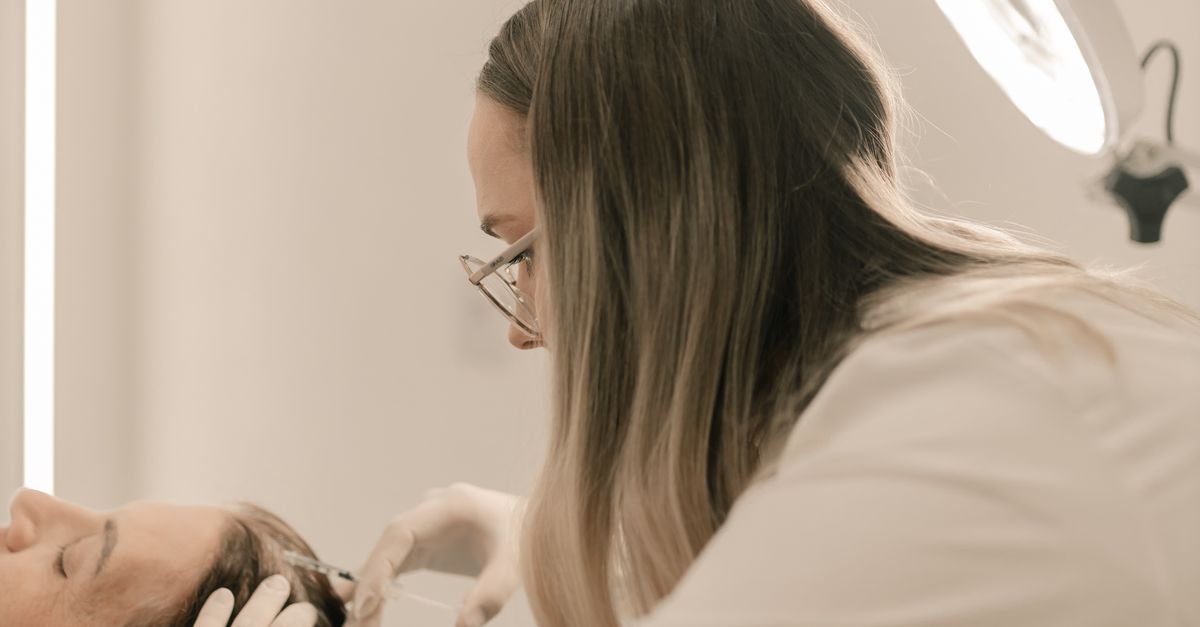
- Treatment: small patches are injected with diluted corticosteroid; topical steroids or minoxidil may be added.
- Extensive disease: discussion of topical immunotherapy, short steroid courses or JAK inhibitors, often with university hospital involvement.
- Follow-up: repeat injections and review every 4–6 weeks.
Treatment outlook
Many people with limited patches regrow hair within months, sometimes without treatment. New hair may first appear fine and white, then darken. Relapses are common over a lifetime. Extensive or long-standing disease, and onset in childhood, are associated with a less predictable course. Newer JAK inhibitors have improved options for severe cases.
Risks and side effects
- Steroid injections: temporary skin dents (atrophy), pain at injection sites
- Topical steroids: skin thinning with prolonged use
- Systemic steroids: weight gain, mood and blood sugar changes; not used long-term
- JAK inhibitors: infection risk and lab abnormalities; require monitoring
Choosing a clinic for alopecia areata in Seomyeon
- See a board-certified dermatologist experienced in autoimmune hair loss.
- Ask whether blood tests for thyroid and related conditions are recommended.
- Ask how injection doses are chosen to minimise skin atrophy.
- For extensive loss, ask about access to JAK inhibitor therapy and monitoring.
- Ask about psychological support; patchy hair loss can be distressing.
For residents and students
Injection-based treatment every few weeks suits those living in Busan. Seomyeon's dermatology clinics are a convenient stop on either metro line.
Key facts
- Condition: autoimmune, non-scarring patchy hair loss
- Patterns: single or multiple patches; totalis (whole scalp) or universalis (whole body) in severe cases
- First-line: intralesional corticosteroid injections, potent topical steroids
- Other options: topical immunotherapy, minoxidil, systemic steroids short-term
- Severe disease: oral JAK inhibitors (e.g., baricitinib, ritlecitinib) under specialist care
- Injection interval: about every 4–6 weeks
- Typical NHI coverage: medical treatment generally covered for enrollees
Frequently asked questions
Will my hair grow back with alopecia areata?
Often yes, because follicles are not destroyed. Many people with small patches regrow hair within months, with or without treatment. Larger or long-standing hair loss is less predictable, and relapses can occur.
Is alopecia areata caused by stress?
Stress is commonly reported before episodes, but alopecia areata is an autoimmune condition with genetic factors. Stress may act as a trigger in some people rather than being the underlying cause.
Do steroid injections for alopecia areata hurt?
Injections cause brief stinging, and multiple small injections are given across the patch. Numbing cream can help. Most people tolerate it well, with mild tenderness afterward.
What are JAK inhibitors for alopecia?
JAK inhibitors are oral medicines that block immune signals driving alopecia areata. They are used for severe cases and can produce significant regrowth, but require screening and blood monitoring for side effects.
Can I get a hair transplant for alopecia areata?
Generally no. Because the immune system can attack transplanted follicles too, transplants are not recommended for active alopecia areata. Medical treatment is the mainstay.
Medical disclaimer: Seomyeon.Clinic is an independent information directory. Content is for general education and does not replace a consultation with a licensed physician. Suitability, risks, results and costs vary by person and clinic. In an emergency in Korea, call 119.