
Treadmill Stress Test in Seomyeon, Busan
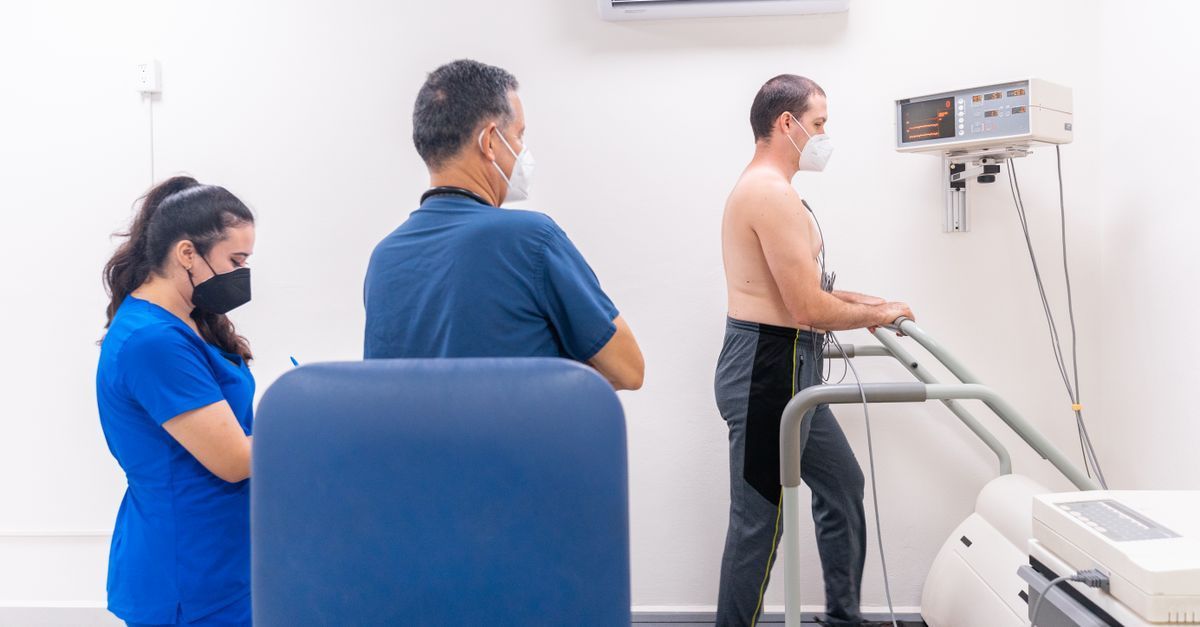
A treadmill stress test (운동부하검사) records your ECG, heart rate and blood pressure while you walk on a treadmill at increasing speed and incline. In Seomyeon, cardiology clinics use it to check for reduced blood flow to the heart and to measure exercise capacity. The exercise portion usually lasts 6–15 minutes under supervision, and the whole visit about an hour.
Independent patient guide · Medically informative, not a substitute for a doctor's advice · Last reviewed:
What is a treadmill stress test?
When coronary arteries are narrowed, the heart may get enough blood at rest but not during exertion. A treadmill stress test, or exercise ECG, deliberately increases the heart's workload while monitoring for ECG changes, symptoms, abnormal blood pressure responses or rhythm problems that suggest reduced blood supply. It also measures how long you can exercise, which is a useful indicator of overall cardiovascular fitness and prognosis.
Who is it for?
- People with chest discomfort or breathlessness on exertion that has been stable over time
- Assessment of known coronary disease or after treatment such as a stent
- People with multiple risk factors starting a vigorous exercise program
- Evaluation of exercise-related palpitations
- Some occupational or pre-operative assessments
It is not suitable for new, worsening or rest chest pain, which may be unstable angina or a heart attack: call 119. Severe valve narrowing, uncontrolled high blood pressure and some arrhythmias are also reasons to avoid the test or choose an alternative.
What happens at the clinic
- Screening: the doctor reviews symptoms, medicines and a resting ECG to confirm the test is safe.
- Medicines: you may be asked to pause beta-blockers or some other heart medicines beforehand; never stop medicines without instruction.
- Setup: electrodes are placed on your chest and a blood pressure cuff on your arm.
- Exercise: you walk on the treadmill; every few minutes the speed and slope increase. Tell staff about chest pain, unusual breathlessness or dizziness.
- Recovery and review: monitoring continues for several minutes after stopping, and the doctor explains results.
After the test
You may feel tired and sweaty; most people return to normal activities the same day. A normal test is reassuring for many people. Abnormal or inconclusive results may lead to coronary CT angiography, stress echocardiography, nuclear imaging or coronary angiography.
Risks and limitations
Serious complications, such as heart attack or dangerous arrhythmia, are rare, and the test is supervised with emergency equipment available. The test is less accurate in some groups, including people with certain baseline ECG abnormalities, and false positive and false negative results occur, so it is interpreted with other information.
Choosing a clinic for a treadmill stress test in Seomyeon
- Confirm a physician supervises the test and resuscitation equipment is on hand.
- Ask whether you should pause any medicines and for how long.
- Ask what follow-up imaging the clinic can arrange if results are unclear.
- Check whether a stress echocardiogram is offered for more detail.
- Request your exercise capacity and results summary in writing.
On the day
Wear trainers and comfortable clothing, and avoid a heavy meal or caffeine for a few hours before. Seomyeon clinics are easy to reach by metro, but arrange not to rush, as hurrying beforehand can affect your baseline readings.
Key facts
- Detects: signs of coronary artery disease, exercise-induced arrhythmias, blood pressure response, fitness level
- Protocol: staged increases in speed and incline (commonly Bruce protocol)
- Exercise time: typically 6–15 minutes
- Total visit: about 45–60 minutes
- Preparation: comfortable shoes, light meal 2–3 hours before, possible medicine adjustments
- Supervision: continuous ECG and blood pressure monitoring
Frequently asked questions
How long does a treadmill stress test take?
The exercise portion usually lasts 6 to 15 minutes, depending on your fitness and symptoms. Including preparation and recovery monitoring, plan for about 45 to 60 minutes.
What should I wear for a stress test?
Wear comfortable walking or running shoes and loose clothing suitable for exercise. A two-piece outfit helps, since electrodes are placed on your chest.
Should I stop my heart medicines before the test?
Sometimes. Beta-blockers and certain other medicines can blunt the heart rate response, so your doctor may ask you to pause them. Only do this if specifically instructed.
Is a treadmill stress test safe?
It is generally safe when properly screened and supervised. Serious complications are rare, and staff monitor your ECG and blood pressure throughout and can stop the test at any time.
What if my stress test is abnormal?
An abnormal result suggests possible reduced blood flow but is not a definitive diagnosis. Your doctor may recommend coronary CT angiography, stress imaging or a coronary angiogram for clarification.
Medical disclaimer: Seomyeon.Clinic is an independent information directory. Content is for general education and does not replace a consultation with a licensed physician. Suitability, risks, results and costs vary by person and clinic. In an emergency in Korea, call 119.