
Sports Heart Screening in Seomyeon, Busan
Sports heart screening checks athletes and active people for heart conditions that could cause problems during intense exercise, such as cardiomyopathy or inherited rhythm disorders. In Seomyeon, cardiology clinics usually combine a history questionnaire, examination and 12-lead ECG, adding an echocardiogram or exercise test when indicated. Results are interpreted using athlete-specific criteria to distinguish normal training adaptations from disease.
Independent patient guide · Medically informative, not a substitute for a doctor's advice · Last reviewed:
What is sports heart screening?
Regular intense training changes the heart: chambers enlarge, walls thicken slightly and resting heart rate slows. This athlete's heart is normal, but some changes can resemble disease on tests. Rare inherited conditions, such as hypertrophic cardiomyopathy, arrhythmogenic cardiomyopathy, long QT syndrome or coronary artery anomalies, can cause collapse during exercise in young people. In older recreational athletes, coronary artery disease is the more common concern. Screening aims to identify these conditions and give safe exercise advice.
Who is it for?
- Competitive athletes and those required by clubs or event organisers to provide a medical certificate
- Middle-aged or older adults starting endurance events, especially with risk factors
- Anyone with a family history of sudden cardiac death under about 50, cardiomyopathy or inherited rhythm disorder
- Athletes with symptoms during exercise
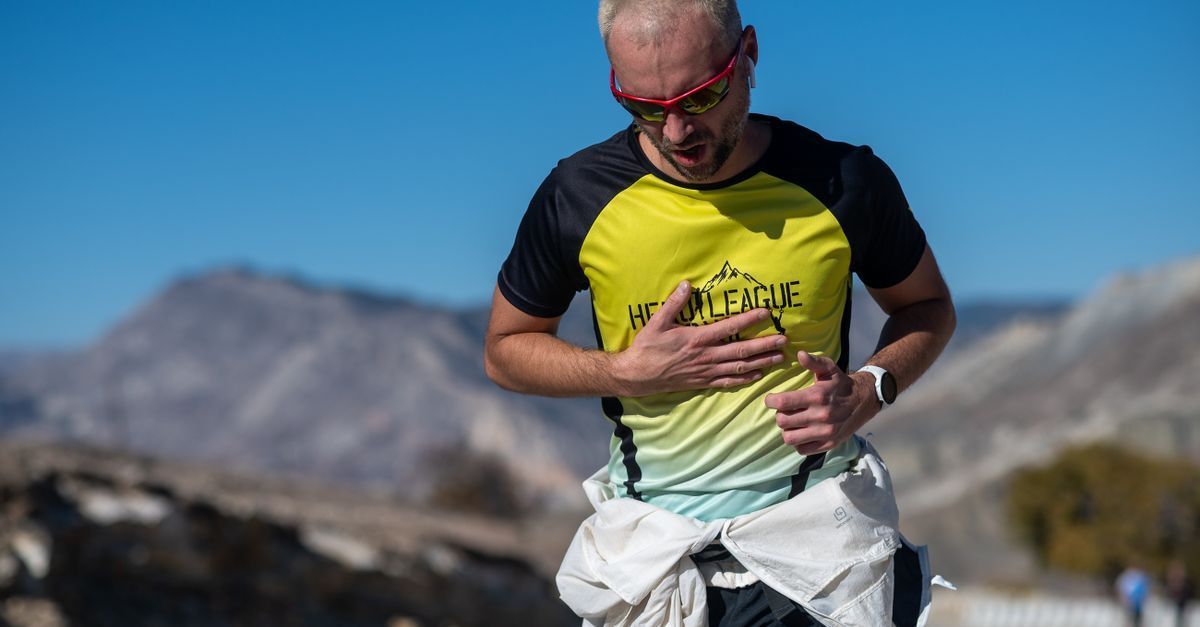
Stop exercising and seek help for chest pain, unusual breathlessness, palpitations or near-fainting during exercise. Collapse during exercise is an emergency: call 119 and start CPR if the person is unresponsive and not breathing normally, using an AED if available.
What happens at the clinic
- Questionnaire and history: symptoms during exercise, past fainting, family history and training load.
- Examination: blood pressure, heart sounds for murmurs, and signs of inherited conditions.
- 12-lead ECG: interpreted with international athlete criteria to avoid over-diagnosis.
- Echocardiogram: if ECG or examination is abnormal, or for higher-level athletes, to measure wall thickness and chamber size.
- Exercise test or monitoring: for older athletes with risk factors or exercise-related symptoms.
After screening
Most athletes receive reassurance and a certificate if needed. If a condition is found, the cardiologist discusses which sports remain safe; current approaches emphasise shared decision-making rather than automatic exclusion. Further genetic or imaging tests may be recommended for borderline findings.
Risks and limitations
Screening tests are safe. No screening detects every condition, and false positives can cause anxiety or unnecessary restriction, which is why experienced interpretation matters. Normal results do not replace attention to new symptoms.
Choosing a clinic for sports heart screening in Seomyeon
- Ask whether ECGs are interpreted using athlete-specific criteria.
- Check that echocardiography and exercise testing are available on site.
- Bring any race medical forms that need completing.
- For masters athletes, ask whether a coronary risk assessment is included.
- Ask for written guidance on safe training levels if any finding is borderline.
Before your next race
Busan hosts plenty of running events along its coast. Book screening a few weeks before race day; clinics near Seomyeon's Line 1 and 2 interchange are convenient for training-week visits.
Key facts
- For: competitive athletes, marathon and triathlon participants, people starting intense training
- Core components: personal and family history, examination, 12-lead ECG
- Additional tests: echocardiogram, exercise stress test, Holter monitoring
- Interpretation: athlete-specific ECG criteria
- Looks for: cardiomyopathies, inherited arrhythmia syndromes, valve disease, coronary disease in older athletes
- Visit time: about 30–90 minutes depending on tests
Frequently asked questions
Who should get a sports heart screening?
Competitive athletes, people with a family history of sudden cardiac death or inherited heart disease, older adults starting endurance events, and anyone with symptoms during exercise.
What is athlete's heart?
It is the normal enlargement and thickening of the heart from regular intense training, often with a slow resting heart rate. Experienced cardiologists distinguish it from cardiomyopathy using ECG criteria, echocardiography and sometimes detraining.
Can an ECG detect heart problems in athletes?
An ECG can detect many conditions linked to sudden cardiac death, such as cardiomyopathies and inherited rhythm disorders, but not all. An echocardiogram or other tests may be added.
Do I need a medical certificate for a marathon in Korea?
Requirements vary by event. Some organisers request health declarations or certificates. Check your event's rules, and ask the clinic to complete any required forms.
What are warning signs during exercise?
Chest pain or pressure, unusual breathlessness, palpitations, dizziness or fainting during or just after exercise. Stop immediately and seek medical evaluation; call 119 for collapse.
Medical disclaimer: Seomyeon.Clinic is an independent information directory. Content is for general education and does not replace a consultation with a licensed physician. Suitability, risks, results and costs vary by person and clinic. In an emergency in Korea, call 119.